
Why DOOH Advertising Works for Local Businesses
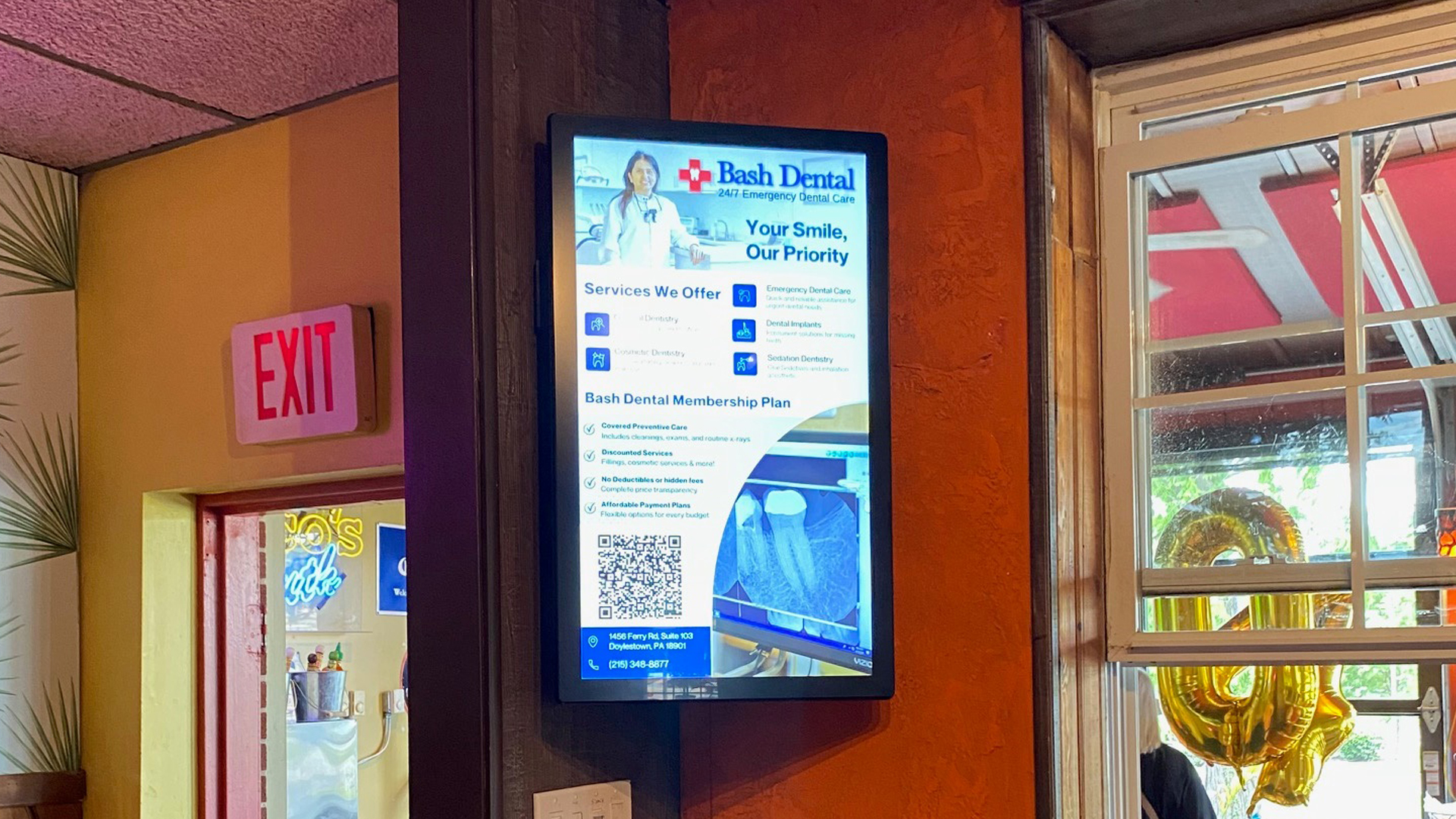
Picture someone waiting for a takeout order on a Wednesday evening. They glance at the screen across from the counter and see a local garden center advertising spring planting workshops. A few days later, when they start looking for tomato seedlings, they remember the name. They may have taken no immediate action at the restaurant, yet the ad gave them somewhere to start when they had a reason to look.
Digital out-of-home advertising, usually shortened to DOOH, puts messages on digital displays in shared physical spaces. That includes roadside billboards and transit displays as well as screens inside restaurants, gyms and shops. For a local business, the opportunity comes down to three decisions: where the ad runs, what it says and what customers can do after seeing it.
The venue shapes who sees the ad and how they see it
The same display can have very different value to two businesses. A physical therapy practice serving patients within a short drive may find a nearby fitness venue relevant. A specialist supplier delivering across several counties may care more about reaching people in a handful of trade-related locations than appearing on the busiest screen in town. The venue is part of the media buy because it determines who is likely to encounter the message and under what circumstances.
Start with the people you already serve. Where do they come from? Which parts of town do they visit during the week? How far are they willing to travel for your service? A restaurant selling weekday lunches might prioritize areas where nearby workers can realistically get to the restaurant during a break. A specialty retailer might reach people who plan occasional trips from farther away. Both are local campaigns, but the maps can look very different.
Then check where the screen sits inside the venue. A display visible from a waiting area gives people a different opportunity to read than one near an exit. Ask for a recent photo from the audience’s point of view. A screen can look large in a close-up yet sit at an angle from the seats people actually use. A photo or brief visit helps you judge how much information a viewer can reasonably absorb.
Repetition gives people a second chance to remember you
People often pass through the same places every week. A parent may visit a café after school drop-off, or a gym member may work out at a similar time on their way home. A repeating rotation can give those visitors more than one opportunity to see a business name. Each repeat is a chance to connect the name with a service, location or offer.
Think about a home-improvement contractor whose customers usually start looking only after something needs fixing. A person who sees a clear ad for deck repairs in March might have no project in mind. By May, that same person might notice a loose railing and remember that there was a local company doing this kind of work. The screen’s contribution could show up weeks later as a branded search, a conversation or a request for an estimate.
Plan the creative so the recognizable parts survive changes. A garden center can swap tomato seedlings for fall bulbs while keeping its name, location and visual layout easy to spot. Someone who remembers the earlier ad can connect it with the new one. Start a new version when there is a clear reason, such as a seasonal offer, a change in hours or a call to action that better fits the venue.
What the research says about taking action
In a 2024 U.S. survey conducted by The Harris Poll and released by the Out of Home Advertising Association, 76% of recent DOOH viewers reported taking some action because of a digital out-of-home ad. The underlying survey covered 1,023 U.S. adults ages 18–64. The actions people reported spanned several categories, including visits, searches and conversations. The finding is useful because it reflects more ways for a viewer to respond than buying on the spot.
The result describes what respondents reported across DOOH settings. It gives a local advertiser no forecast for a particular screen, and it cannot establish that an ad caused every reported action. A restaurant running its own campaign still needs a way to tell whether people remembered the offer, whether they could find it later and whether any responses were strong enough to justify continuing.
Design the ad for the middle of someone’s day
Think about what happens when a viewer looks up halfway through a fifteen-second spot. They should still be able to see who the ad is from and what it offers. A straightforward design keeps the business name visible, puts the main idea in large type and offers one next step. If people would have to hear a voice-over or read several frames in sequence, shorten the message until it also makes sense at a glance.
A hypothetical bike shop might advertise a spring tune-up with a photograph of a real bike on its workstand, the shop name and a short booking address. That gives the viewer enough to recognize the service, remember the shop and find it again. If there is a special price, the shop should give the amount enough time on screen and make any qualifying details easy to find on the page it sends people to.
A QR code can be useful in a waiting area where people have time to take out a phone. Test it at roughly the same distance as a typical viewer and leave it visible long enough to scan. Put a searchable business name or short URL beside it. Someone who sees the ad from across the room still needs a practical way to follow up. When the ad is ready, watch it once without sound and from farther away than you sit at your desk. See which elements you can read without trying.
Decide what counts as success before spending
Choose a goal specific enough that you can tell whether the campaign is helping. A restaurant might want more weekday lunch orders. A service business could look for qualified requests in the towns it serves. A newly opened shop might want customers to recognize the name and know where to find it. Each goal changes the message and the way you watch for results.
| What you want to learn | What to record | What the result can tell you |
|---|---|---|
| Did the ad run in the agreed venues? | Screen list, campaign dates and available play logs | Whether the scheduled creative was delivered |
| Did people follow the screen-specific link? | Visits to a tagged URL or an ad-only landing page | Direct responses attributable to that route |
| Are people remembering the name? | Branded search trends and how customers say they heard of you | Whether more people are seeking you out or mentioning the campaign |
| Did it generate worthwhile business? | Offer redemptions, qualified inquiries or attributed bookings | Whether identifiable responses were commercially useful |
Proof of play is a record that a spot ran. If a provider also reports audience impressions, ask how it estimates those figures and how it distinguishes them from plays. Meanwhile, your own inquiry or redemption numbers reflect only the responses you were able to observe. In a small campaign, two good conversations may tell you more about relevance than a large number of plays can on its own.
Write down the starting level before launch. If the bike shop usually sees a rush of tune-ups when the weather warms, it should expect some change even without an ad. Compare similar weeks where possible and note other promotions or events. Asking new customers how they heard about you gives context to the numbers, especially when someone recalls a screen but later booked through a general search.
Use the first campaign to learn where to go next
A practical first campaign can be modest. Choose a manageable group of venues, use one creative idea and agree on how you will review the results. Imagine a café trying to attract customers from a nearby business district. It might promote weekday breakfast pickup in venues where those workers already spend time, use one address customers can remember and ask staff to note mentions of the screen when people collect orders.
At the review, examine the evidence in order. First check whether the ad actually ran and whether customers in those venues could see it. Then look at responses and ask which locations people mentioned. If delivery was fine but almost nobody found the offer page, try a simpler next step or a stronger placement before increasing the number of screens. If customers in one venue kept mentioning the ad, look for another venue with a similar routine and audience.
The advantage of place-based DOOH comes from being specific about where someone encounters your name and what they can do with it. Put a clear message where the right people already go, make it easy to follow up and evaluate the campaign against the job you gave it. That is a more useful starting point than buying screens based on traffic alone. See how a Sunview screen campaign works.
Sources and methodology
- The Harris Poll and the Out of Home Advertising Association, The Effectiveness of Digital OOH Advertising (2024). The survey was conducted online in the U.S. on April 2–9 and weighted to reflect the population on specified demographic characteristics. The action result is self-reported. Study and methodology
- Out of Home Advertising Association, Video Out of Home Buyers’ Guide. Used for the distinction between proof-of-play records and audience measurement. Buyers’ guide